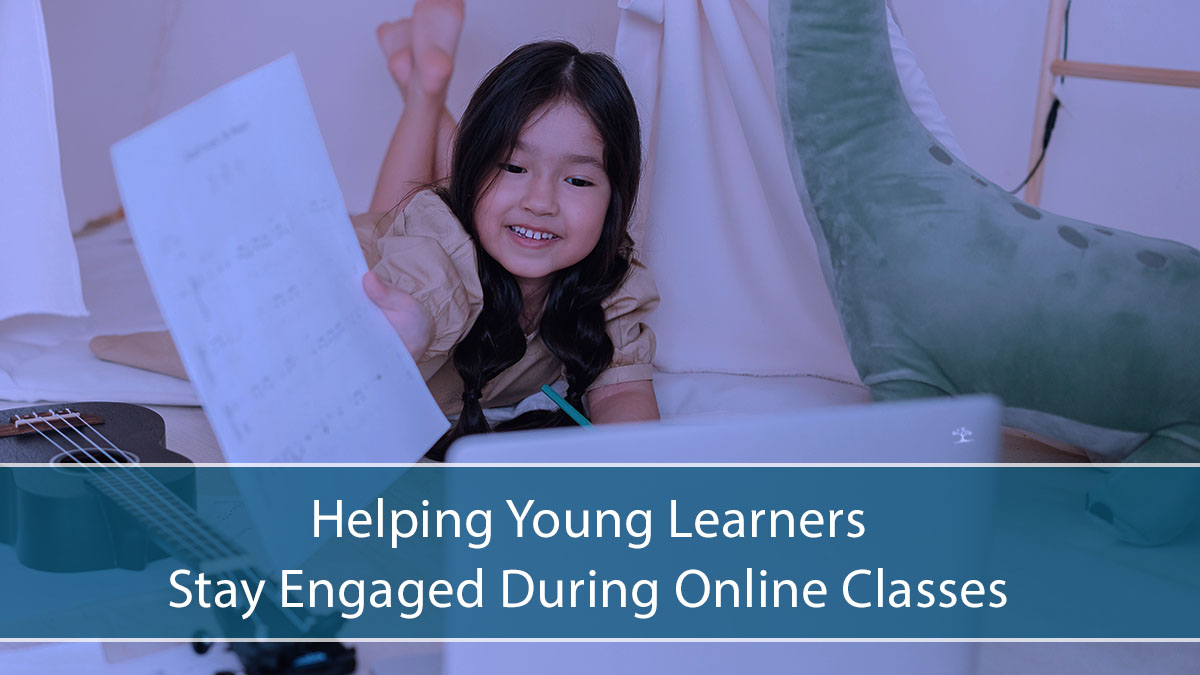
Your student is logged in, the camera is on, and their eyes are somewhere near the ceiling fan. If that sounds familiar, you are not alone, and it does not mean online classes are the wrong fit. Young students learn best when they are actively involved, and that is true on a screen just as it is in a classroom.
This post covers why younger students drift during online classes, what an engaging live class actually looks like, and practical steps you can take at home to help your student stay involved. You will also find questions to ask when you are choosing classes, so you can pick instruction that keeps students participating instead of just watching.
Why Young Students Lose Focus During Online Classes (and Why It’s Normal)
Attention spans in TK through fifth grade are still developing. Young students need to move, talk, touch things, and switch activities often. Asking a six-year-old to sit still and watch a screen for a long stretch is a tall order in any setting.
The screen is rarely the real problem. Passive learning is. When a student is only watching or listening, attention fades quickly. When a student is answering questions, sharing ideas, and working on something with a teacher and classmates, the screen becomes a window into a real class.
This is why the way a class is taught matters so much. At Branches Learning, students learn live with a teacher, not through self-paced software or recorded videos. A live teacher can notice when a student is drifting, ask them a question by name, and change the pace on the spot. Software cannot do that.
It also helps to know what disengagement looks like. A student who is losing focus might fidget, look away from the screen, go quiet, or ask to take a break every few minutes. These are signals, not bad behavior. They usually mean the student needs a different kind of involvement, whether that is a question, a change of pace, or a little more support.
The Benefits of Teacher-Led Online Learning vs. Self-Paced Programs
What Engaging Live Online Classes Look Like
Not every online class is built the same way. When families are comparing options, these are the features that make the biggest difference for young students.
Small Class Sizes
When a class is small, every student is seen and heard. Teachers can check in with each student, and quieter students have room to speak up. It is much harder to fade into the background in a small live class, and that alone can change how a student shows up.
Teachers Who Know Their Students
Relationships drive engagement. A teacher who knows a student’s name, interests, and preferred way of working can ask better questions and offer encouragement that lands. Branches Learning teachers are experienced educators who build these relationships class after class, so students feel comfortable participating.
Personalized Instruction
Students do not all learn at the same speed or in the same way. In a live class, a teacher can slow down for a concept that needs more time, offer a challenge to a student who is ready for more, and explain an idea a second way when the first one does not click. That kind of personalized instruction keeps students from tuning out because the material feels too easy or too hard.
Project-Based Learning
Project-Based Learning (PBL) gives students something to create, explain, or solve. Instead of memorizing facts in isolation, students work toward a project, and that gives each lesson a purpose. A student who is building something has a real reason to stay tuned in.
Frequent, Built-In Interaction
Engagement is not left to chance in a well-designed live class. Look for classes where students regularly:
- Answer questions out loud
- Use the chat to share ideas
- Show their work to the teacher and classmates
- Complete short hands-on activities with materials at home
- Work with a partner or small group
How to Set Up Your Student for Success at Home
A great teacher does a lot of the work, but the home setup matters too. A few small changes can make class time smoother for everyone.
- Create a consistent workspace. Choose a quiet spot with good lighting and as few distractions as possible. A table and chair usually work better than a couch or bed, and using the same spot each day tells your student’s brain it is time for class.
- Do a quick tech check. Test the camera, microphone, and internet connection before class starts. Solving a technical problem in the first five minutes can leave a young student frustrated before the lesson even begins.
- Gather supplies ahead of time. Have pencils, paper, and any project materials within reach, so your student is not hunting for a glue stick while the teacher is teaching.
- Fuel up and move first. A snack, a glass of water, and a few minutes of active play right before class can help students settle in. Movement beforehand makes sitting easier.
- Stay close without taking over. For younger students, being nearby for support helps. Try to let your student answer questions and do the work themselves, so the teacher can see what they understand.
Think about the whole day, too. If your student has several classes, build in time between them to stand up, stretch, get outside, or simply rest their eyes. A student who has had a real break comes back to the next class ready to participate, rather than running on empty.
Simple Habits That Build Focus During Class
Focus is a skill, and young students build it with practice. These everyday habits help.
- Keep a predictable routine. Regular class times and a familiar routine before and after help students know what to expect.
- Praise effort and participation. Notice when your student raises a hand, asks a question, or keeps trying on something hard. Encouragement for effort builds the confidence students need to speak up.
- Offer quiet hands-on options. Some students concentrate better with something small to hold. If you are unsure what works in class, ask the teacher which tools fit best.
- Welcome questions. Let your student know that asking for help or clarification is part of learning. Students who feel safe asking questions tend to stay more involved.
- Talk about class afterward. Ask, “What was the most interesting thing you did today?” Retelling class helps students remember it and gives you a window into what is working.
Confidence plays a bigger role in engagement than many families expect. A student who worries about giving a wrong answer often stays silent, and silence looks a lot like distraction. When students feel safe making mistakes in front of their teacher and classmates, they tend to join in more freely, and that participation is what keeps attention where it belongs.
What to Do When Engagement Is Still a Struggle
Some days are harder than others, and some students need more support than tips alone can provide. If your student regularly struggles to stay engaged, you have options.
- Talk with the teacher. Teachers see things you may not, such as when a student seems to lose focus or which activities spark interest. They can adjust how they involve your student.
- Loop in your Homeschool Teacher (HST). Your HST knows your student’s overall plan and can help you think through whether a class is the right level, subject, or time of day.
- Consider fit. A class that is too easy can be boring, and one that is too hard can be discouraging. Class time matters too, since a student who is tired by afternoon may do better in a morning class.
- Explore tutoring. One-on-one or small-group tutoring can give a student extra attention and a chance to build confidence at their own pace.
Patience helps here. Building the stamina to learn in a live online class takes time, and progress often comes in small steps. Flexible learning options exist so families can adjust as they go.
You know your student best. Share what you notice with the teacher and your HST, including what your student enjoys and what makes class feel hard. That partnership between family, teacher, and HST is often what turns a frustrating class into a good fit.
Choosing Live Classes That Keep Students Involved
When you are comparing online options, the questions you ask can tell you a lot about how engaged your student will be. Consider asking:
- How many students are in a typical class?
- Will my student learn live with a teacher, or watch recorded lessons?
- How do students participate during class?
- What does a typical lesson look like for my student’s grade?
- Are there hands-on activities or projects?
- How does the teacher communicate with families?
Live, teacher-led classes with small groups give young students the attention and interaction they need to stay involved. That is the approach Branches Learning takes across TK-12 courses and tutoring.
Ready to see what is available? Browse the Branches Learning course catalog to find live classes for your student, and reach out to your Homeschool Teacher (HST) to talk through which classes fit your student’s plan.
Branches Learning course catalog
Frequently Asked Questions
How long can young students stay focused during an online class?
There is no single answer, because it varies by age and by student. Younger students generally do best when a class changes activities often and includes movement or hands-on work. If your student tires quickly, talk with the teacher about pacing and ask what you can do at home to help.
What if my student does not want to turn on their camera?
Start by asking why. Some students feel shy or self-conscious. Talk with the teacher, who can often make the class feel more comfortable and suggest ways to ease your student into participating.
How much should I help during class?
Younger students often need a parent or guardian nearby for setup and support. Once class is underway, let your student answer and complete the work on their own so the teacher can see what they understand and adjust instruction.
How are live classes different from self-paced programs?
In a live class, your student learns in real time with a teacher who asks questions, responds to students, and adjusts the lesson as it happens. Self-paced programs rely on software or recorded content, so there is no teacher responding to your student in the moment. Branches Learning offers live, teacher-led instruction.
What should I do if my student says online classes are boring?
Ask what feels boring. It might be the pace, the subject, or the class format. Share what you learn with the teacher and your Homeschool Teacher (HST), who can help you find a better fit or add supports like tutoring.