
If you have ever worried that online school means a screen full of quiet, disengaged faces, you are not alone. It is one of the first questions families ask when they consider live online classes for the first time.
The good news is that engagement is not a matter of luck online. It is a direct result of structure, and live, teacher-led instruction is built to keep students involved in ways that self-paced programs simply cannot match.
In this post, we will look at what real engagement looks like in a live online classroom, why it tends to fade in self-paced formats, and what families and Homeschool Teachers (HSTs) can watch for as signs that a student is genuinely connected to their coursework.
What Student Engagement Actually Looks Like in a Live Classroom
Engagement is more than a student sitting still in front of a screen. It shows up in specific, observable behaviors: asking a question when something is confusing, contributing an idea during discussion, reacting to a classmate’s comment, or working through a problem out loud with a teacher’s guidance.
These moments only happen in real time. A recorded lesson or an automated module can hold a student’s attention for a while, but it cannot respond when a student raises a hand, misreads a question, or needs a concept explained a different way. A live class can, because a teacher is actively watching, listening, and adjusting.
Why Self-Paced Programs Struggle to Keep Students Engaged
Self-paced platforms have their place, but they were not designed to replace the relationship between a student and a teacher. Without a live person guiding the lesson, students are largely on their own to stay motivated, catch their own mistakes, and push through difficult material.
This creates a few predictable problems:
- No one notices when a student is confused but silent.
- Feedback is often delayed, automated, or generic rather than specific to the student.
- Isolation sets in quickly when a student never interacts with a teacher or classmates.
- Accountability depends almost entirely on the student’s own follow-through.
None of this means self-paced tools are without value. They can be useful for extra practice or review. But when it comes to building consistent engagement over a full course, live instruction has a structural advantage that software alone cannot replicate. We cover this comparison in more detail in The Benefits of Teacher-Led Online Learning vs. Self-Paced Programs.
How Live Teachers Drive Engagement
A teacher leading a live class does far more than present information. Throughout each session, the teacher reads the room: noticing when students seem lost, when energy drops, or when a topic sparks real curiosity, and adjusting the pace accordingly.
Over the course of a semester, this back-and-forth builds something self-paced programs cannot offer: a relationship. Students who feel known by their teacher are far more willing to participate, ask for help, and take academic risks in front of their classmates.
Small class sizes make this possible. When a teacher works with a manageable group instead of hundreds of anonymous logins, individual attention becomes realistic rather than aspirational.
The Role of Interaction and Participation
Engagement grows when students are active participants, not passive viewers. In a live class, that might look like:
- Answering questions or polls in real time
- Working through problems with a teacher guiding the process
- Participating in breakout discussions with classmates
- Contributing to hands-on or project-based work tied to the lesson
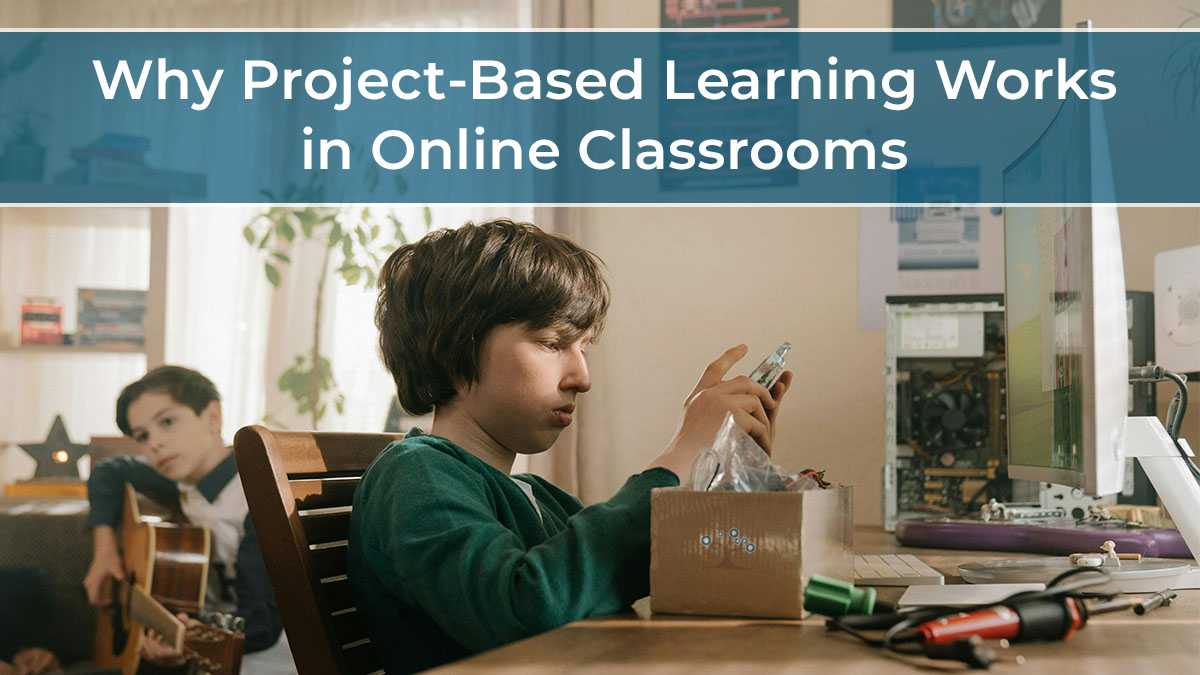
Project-Based Learning (PBL) is a particularly strong engagement tool because it gives students something to build, solve, or present rather than simply absorb. Students also benefit from interacting with peers, which reduces the isolation that can come with independent study and reinforces that they are part of a class, not working alone. Families interested in exploring specific live courses can browse the Branches Learning course catalog for current offerings.
Engagement Strategies Branches Learning Teachers Use
While every teacher brings their own style to the classroom, live instruction generally relies on a few consistent practices to keep students engaged:
- Regularly checking for understanding rather than assuming it
- Varying activities within a class period instead of relying on one format
- Inviting participation directly, rather than waiting for volunteers
- Connecting lesson content to real-world examples students can relate to
These are not gimmicks. They are the same fundamentals that make in-person instruction effective, applied to a live online setting.
What This Means for Homeschool and Independent Study Families
For homeschool and independent study families, engagement is often the deciding factor between a course that gets finished and one that gets abandoned. Live classes give students a set schedule, a teacher who checks in on their progress, and classmates who create accountability.
This structure also makes coordination easier for your Homeschool Teacher (HST). Instead of trying to evaluate whether a student is truly learning from a self-paced module, an HST can rely on a teacher’s direct observations and feedback from a live class.
Signs Your Student Is Engaged (and What to Watch For)
It can be hard to know from the next room whether a class is actually landing. Here are a few practical signs to watch for:
- Your student logs on a few minutes early rather than rushing in late
- They talk about something specific from class, not just that it happened
- They ask questions about the material outside of class time
- They complete follow-up work without repeated reminders
- They mention classmates or group activities by name
If you notice the opposite- quiet withdrawal, vague answers about what happened in class, or work that only gets done under pressure- it is worth checking in with the teacher directly. Live classes make that conversation possible in a way a self-paced platform never could.
A Practical Next Step
Engagement is not something families have to hope for online. It is built into the structure of a live, teacher-led class through real-time interaction, small group sizes, and a teacher who is actually present for the learning. If you are ready to see what that looks like for your student, explore the Branches Learning course catalog and find a class that fits your family’s schedule.
Frequently Asked Questions
Q: How is a live online class different from a self-paced course? A live class is taught in real time by a teacher who interacts directly with students, answers questions as they come up, and adjusts the lesson based on how students respond. A self-paced course is completed independently, without that real-time interaction.
Q: Can shy students still engage in a live online class? Yes. Small class sizes and a range of participation formats, including breakout discussions and written responses, give students multiple ways to engage beyond speaking up in front of the whole group.
Q: What should I do if my student seems disengaged in a live class? Reach out to the teacher directly. Because live classes involve real-time interaction, teachers can often share specific observations and suggest ways to support your student.